
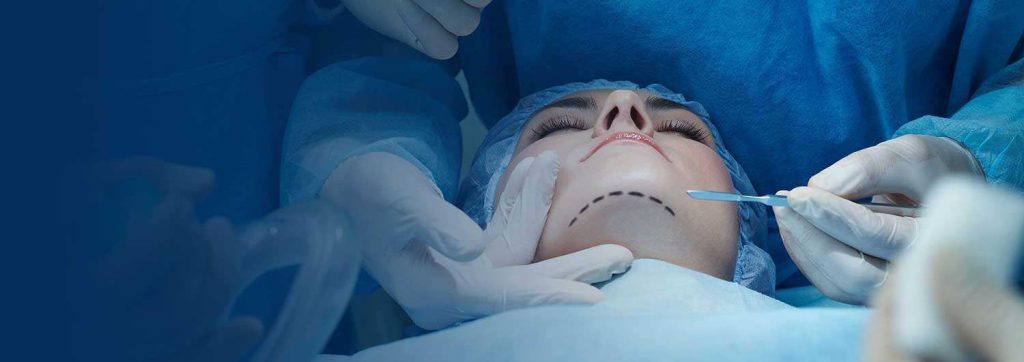
Orthognathic (jaw) surgery is a treatment method carried out jointly by orthodontics and maxillofacial surgery, one of the branches of dentistry, to improve both functionality (chewing, speaking) and aesthetic appearance in patients with severe jaw skeletal disorder.
Orthognathic (jaw) surgery is a surgical procedure that allows improvements on the jaw skeletal structure in cases where the jaw bites are not compatible with each other and the lower jaw is too anterior, posterior or asymmetrical compared to the upper jaw.
Individuals enter a growth spurt period with puberty. From this period to the end of growth, the lower and upper jaws grow downward and forward. While this growth grows symmetrically and directly related to each other in many individuals, there is underdevelopment or excessive growth in the lower or upper jaw in some individuals. Skeletal jaw disorders occur as a result of growth problems.
A number of problems that are noticed during the growth and breakthrough time of the child can be prevented with orthodontic treatments. However, post-growth skeletal problems do not improve by applying force to the jawbones. In this case, the skeletal relationship of the lower jaw, the upper jaw or both at the same time can be corrected with surgical treatment.
Orthodontic treatment (wire treatment) is applied before the surgery in order to correct the relationship of the lower and upper jaws with surgery, in order to ensure that the closing relations (occlusion) of the teeth are compatible after the surgery. Otherwise, the teeth will not close harmoniously after the surgery.
In some cases, wire treatment can be left after surgery. This procedure is called “first surgery”. The joint decision of the maxillofacial surgeon and the orthodontist is important in order to perform the first surgical procedure. With the first surgery, the patient’s skeletal aesthetic anxiety is relieved earlier, while dental problems are resolved after the surgery.
Before the orthognathic surgery of our patients at Dentakademi Oral and Dental Health Center, after cephalometric, panoramic and 3D imaging in our computer-assisted tomography unit in our imaging center, after the consultation of the oral diagnosis, orthodontics and maxillofacial surgery departments, appropriate treatment planning is prepared for the patient. The treatment planning is explained to our patient in detail and all questions of our patient are answered. After our patient accepts the treatment plan we recommend, appointments are organized and the treatment process is started. The first step of the treatment is the orthodontic treatment process, which will last 1-2 years on average.
Before proceeding to the surgical step, the closure of the teeth on the jaws should be corrected. With the wire treatment applied, the teeth are brought to their required positions and the jaw closures are ensured to be correct.
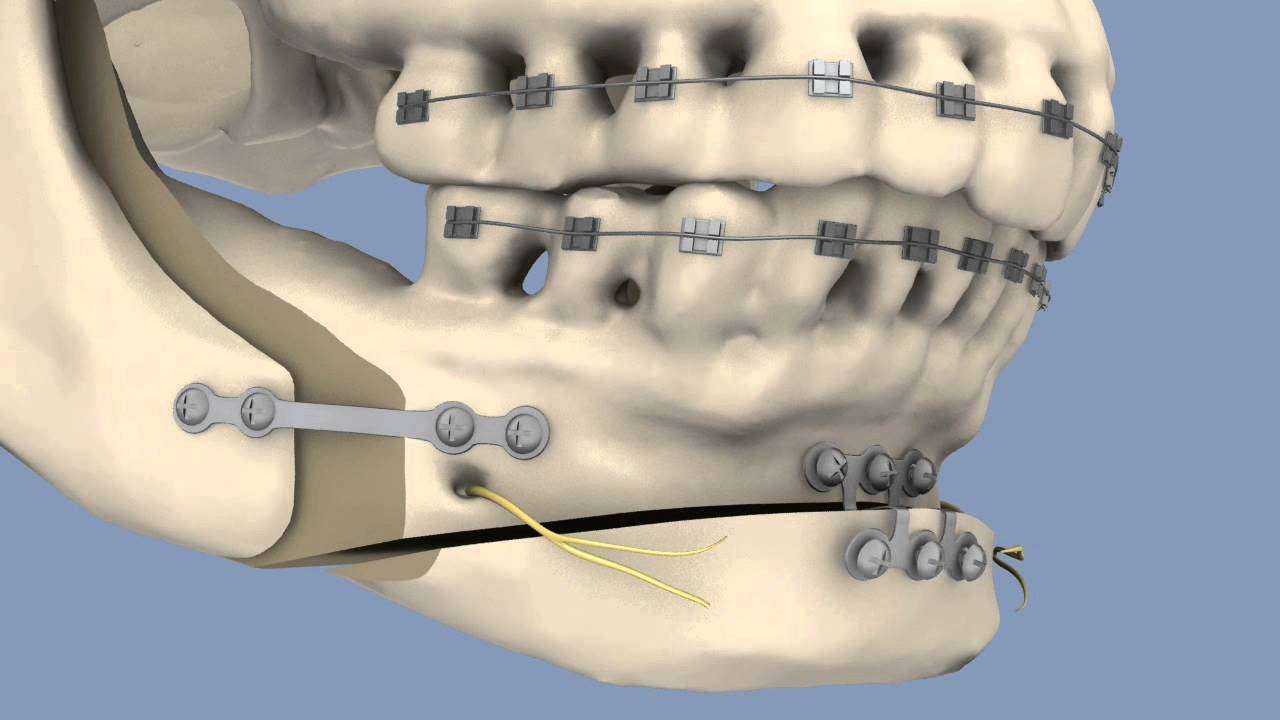 After the orthodontic treatment process is completed and the teeth on the jaw are in the correct positions, the patient is directed to the maxillofacial surgery department of our hospital to plan the surgical process. Our maxillofacial surgeon examines our patient with 3D imaging and informs our patient about the procedure to be performed. After the surgical planning, the surgical phase is started with the approval of our patient.
After the orthognathic surgery, our patient has a recovery period of about 1 month, and the last stage is an orthodontic treatment process that will take 6-12 months. This treatment is the finishing treatment that ensures the permanent position of the teeth after the first orthodontic and corrective surgical procedure.
New appearance of the patient after orthognathic surgery. After the procedure, the jaw skeletal structure of the patient is corrected, providing both aesthetics and functionality.
Orthognathic surgery, unlike implant surgery, is a detailed surgical procedure performed under general anesthesia. For this reason, our patients will not feel any pain or the surgical procedure as they will be under general anesthesia during the procedure.
As with all surgical procedures, complications such as pain, facial swelling, bruising, numbness in the procedure area may occur after the surgical procedure. Compliance with the recommendations of our doctor and the correct use of drugs will help to minimize the complications that may occur and to disappear in a short time.
The surgical procedure applied to people with advanced jaw skeletal disorders is a corrective treatment method applied to adult patients who have completed bone development. If necessary, with this procedure applied on both jaws:
1- Having problems in respiratory functions due to excessive chewing, closing and speaking and improper jaw positions in the face area,
2- It is applied to patients who have aesthetic anxiety in the face area because their chin positions are too far ahead or too far behind each other.
During the first examination, that is, oral diagnosis, the patient’s own wishes are also taken into account while making the treatment plan that the patient needs. Basically, although physical problems are at the forefront, aesthetic concerns are also expressed. The treatment is a treatment that improves the patient’s psychology both in terms of being a corrective operation on the jaw skeletal structure and in terms of bringing the teeth into their own positions and providing aesthetic improvement.
After the procedure, the improvement of the jaw closures and the idealization of the tooth rows create positive results in the patient’s appearance. It improves the quality of life as a result of improvements in speech, chewing and respiratory functions.
